 Our articles
Are Electronic Signatures Legally Binding? What eIDAS Says

The benefits of electronic signatures are plentiful.
Time savings, simpler exchanges, a better user experience, lower costs… The benefits of e-signatures are many and now well known to organisations, which no longer hesitate to adopt software to sign their documents digitally.
Yet some users still worry about the legal value of electronic signatures. Is it equivalent to a handwritten signature? Is a document signed this way valid in every circumstance and in all EU member states? How can you be sure your signing software is compliant? Let’s take stock.
Let’s take stock of the legal value of electronic signatures.

What makes an electronic signature legally valid?
From a strictly legal point of view, an electronic signature can have the same value as a handwritten signature. To enjoy the same evidential value, however, it must rely on a reliable means of identification, so that it is demonstrably linked to the document it is attached to, to the identity of the signatory and to the integrity of the signed document.
It is a fair question. If you choose to sign a PDF, say a service contract, will you enjoy the same protection as if you had signed it on paper?
The answer is yes, provided the conditions are met. You need to use suitable solutions, supplied by qualified trust service providers, that formally identify the signatory (a natural person) and guarantee the integrity of the document.
Where the signatory is a legal entity, the signature is replaced by an electronic seal, which relies on the same mechanisms. This requires the signatory to obtain an electronic certificate beforehand.
Under the EU’s eIDAS Regulation, the electronic signature has the same legal value as the handwritten signature in all EU member states.
What’s more, some e-signature tools go far beyond guaranteeing the legal value of the signature. They back it up with high-level certifications and accreditations for maximum security, and offer features (beyond simply creating a signature) that make life much easier for businesses.
Is an electronic signature legally valid?
Let’s step back for a moment to understand how digital signatures work.
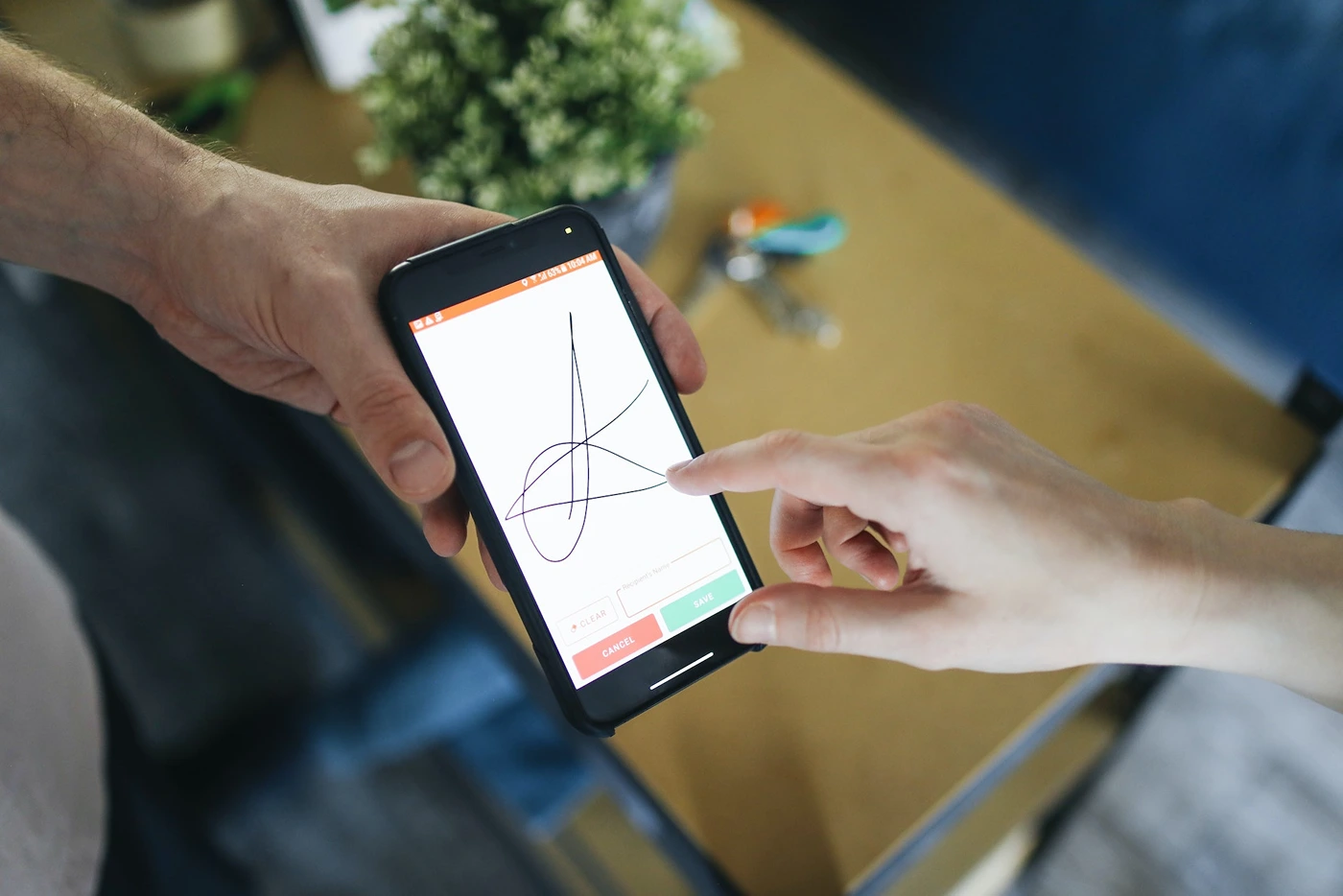
An online signature is not a gesture, but a technical process.
It differs from its handwritten equivalent, and not only in how it is made. An online signature is not a gesture but a technical process, one that authenticates the signatory, guarantees the integrity of the document and gives the document legal value. Once created, electronic signatures are not visible: they take the form of a string of encrypted characters.
Using e-signature software therefore goes well beyond putting a name on a document. By authenticating the author (through an electronic certificate that gives the signatory a genuine digital identity) and sealing the file so that any later change can be detected, a digital signature validates the signatory’s commitment while guaranteeing the integrity of the document. This makes the file tamper-proof, and the signature impossible to forge and irrevocable.
In other words, the legal value of an electronic signature can sometimes be higher than that of a handwritten signature when it comes with more safeguards. That is the case for the qualified electronic signature, the highest level under the eIDAS Regulation, which makes it an ideal tool for securing the most sensitive electronic transactions, legal documents in particular.
What mistakes should you avoid with an electronic signature?
To use electronic signatures well and avoid mistakes, keep two things in mind: the tool you use must include a reliable electronic identification process, and you need to choose the right signature level.
Reliable identification of the signatory
For an electronic signature to carry legal value, the legal framework requires a reliable identification process built into the signing tool. It must guarantee both the identity of the signatory and the integrity of the signed document (by proving it has not been modified since).
For public sector bodies, the eIDAS Regulation sets up a mechanism for the mutual recognition of electronic identification means between EU member states. The electronic identification means must have been issued under a scheme notified by the member state and included on a list published by the European Commission.
The different levels of electronic signature
Another point to watch is choosing the right signature level. The eIDAS Regulation (which aims to increase trust in electronic transactions in the European market) defines three signature levels:
- The simple signature is the first level of security (there is no process to verify the signatory’s identity or consent).
- The advanced electronic signature meets stricter electronic identification criteria. It must be uniquely linked to the signatory, allow the signatory to be identified, be created using signature creation data that the signatory keeps under their sole control, and guarantee the integrity of the document.
- The qualified electronic signature is the highest level of security provided for by the eIDAS Regulation. The criteria are the same as for the advanced signature, but the signatory’s identity must be verified beforehand and the signing key must be provided on a qualified device, issued by a certification authority (supervised by a dedicated body in each member state).
Electronic signatures come in three levels of security.
There is also an intermediate level: an advanced electronic signature based on the signatory obtaining a qualified digital certificate. The two highest levels involve trust service providers.
The level used determines the legal value of the electronic signature. Only the highest level gives the e-signature the same value as its handwritten equivalent. In public procurement, the advanced electronic signature meets the same conditions.
How does Sign.vet guarantee the legal validity of its electronic signatures?
For a business that chooses to sign its documents digitally, it is essential to check that the signing software is lawful and compliant, and to be sure of the legal value of its electronic signatures. So how does Sign.vet guarantee the validity of its signatures? There are three mechanisms:
- Authentication of the signatory, through an identity verification process matched to the signature level required: identification based on identity or knowledge, use of a one-time passcode, meeting in person, and so on.
- A guarantee of the integrity of the signed document, through encryption based on a “private key” and a “public key” (asymmetric cryptography) and on hashing technology.
- Issuance of an electronic certificate when a qualified signature is used.
By authenticating the signatory, guaranteeing the integrity of the signed document and issuing an electronic certificate, Sign.vet guarantees the legal validity of veterinary electronic signatures.